¿La destruyó el incendio de 2022? La respuesta honesta
No: el paisaje sigue intacto y abierto al público.
Reseñado en septiembre de 2026 · consulta las fechas actualizadas de los paseos en barco antes de viajar
La roca no arde
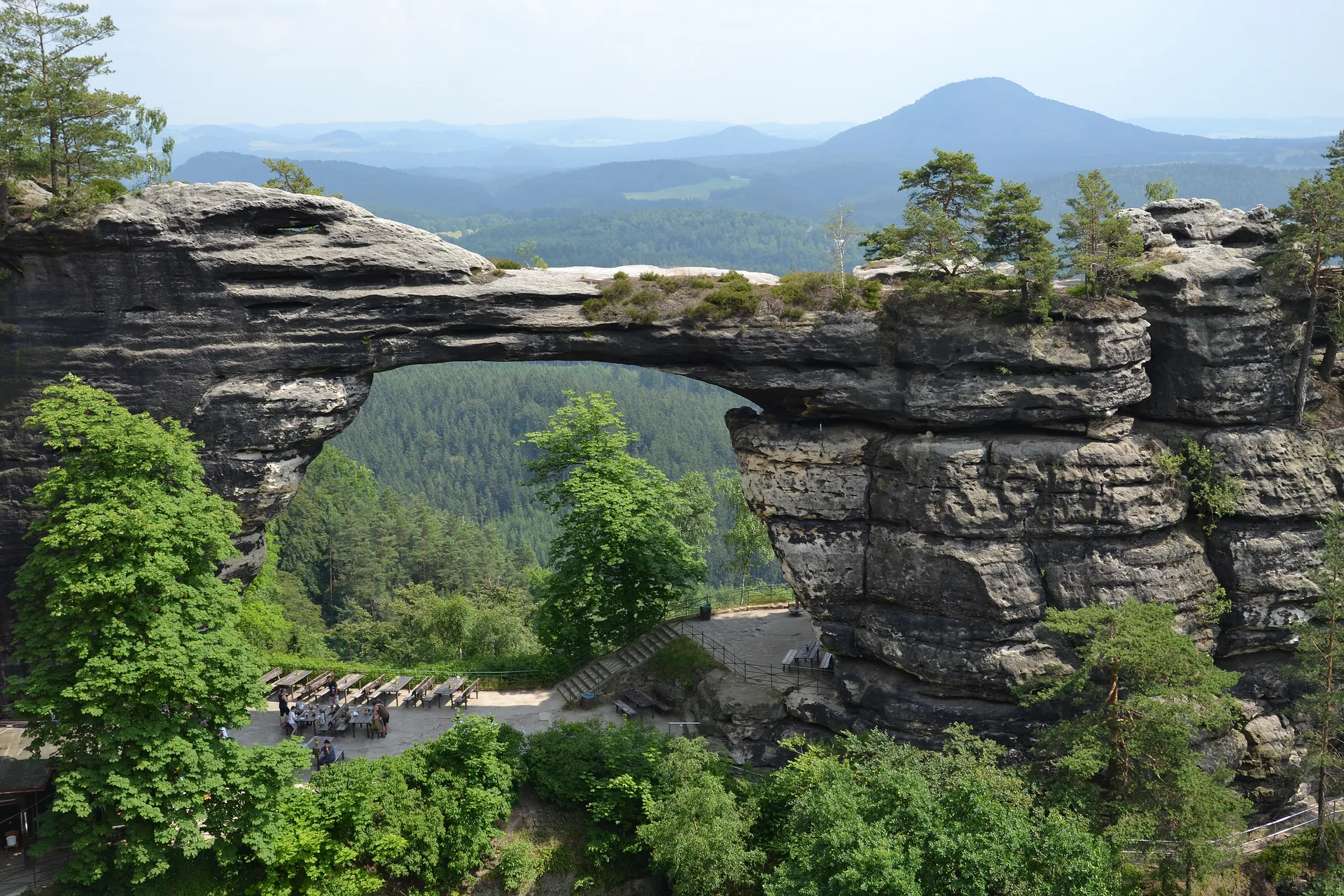
A finales de julio de 2022, un incendio forestal —uno de los más grandes en la historia moderna checa— arrasó el bosque del parque durante unas tres semanas. Pero quemó árboles, no piedra: el arco de Pravčická brána, los desfiladeros y las torres de arenisca están intactos y abiertos. Si te preocupa que no quede nada que ver, sí queda: el paisaje más emblemático salió ileso.
Las barcas por los desfiladeros vuelven a navegar
Los paseos en barca por el desfiladero de Edmund reabrieron el 19 de julio de 2025 tras casi tres años cerrados, ahora con un límite diario de visitantes, venta de entradas presencial en Hřensko y acceso guiado, además de un control periódico de desprendimientos porque el fuego aflojó algunas rocas del acantilado. Es el detalle más cambiante de cualquier página sobre la Suiza Bohemia, así que confirma las fechas y normas de la temporada actual antes de ir.
Un paisaje en recuperación, no un paisaje lunar
Lo que verás en realidad es un vigoroso rebrote joven bajo rodales de pinos muertos en pie en las laderas quemadas: un auténtico paisaje en recuperación que muchos visitantes encuentran interesante, no desagradable. El parque incluso ha construido un nuevo mirador en el sendero Mlýnská cesta precisamente para que contemples el territorio quemado y renacido. Unos 150 km de senderos señalizados volvieron a estar operativos para la temporada de 2024.
- Reserva ahora, paga después Reserva ya tu excursión de un día a la Suiza bohemia y no pagues nada hoy.
- Cancelación gratuita Cancelación gratuita hasta 24 horas antes de la salida, reembolso completo.
- Asiento en barco incluido Una plaza asignada en el barco del desfiladero bajo el cupo diario posterior al incendio
- Pago seguro Reservado a través del pago protegido de GetYourGuide
Por qué la Suiza Bohemia
Por qué la Suiza Bohemia
El paisaje más salvaje de la República Checa
Es el paisaje más espectacular del país, y no se parece en nada a los Alpes que sugiere el nombre: aquí la grandiosidad es horizontal. Profundos desfiladeros, torres de arenisca exentas y el gran arco se alzan sobre un mar de bosque de pinos en el extremo noroeste, junto al Elba, donde la República Checa limita con Alemania. Es la mitad checa de las Montañas de Arenisca del Elba, y su símbolo, Pravčická brána, es el arco natural de arenisca más grande del continente.
Un lecho marino de cien millones de años
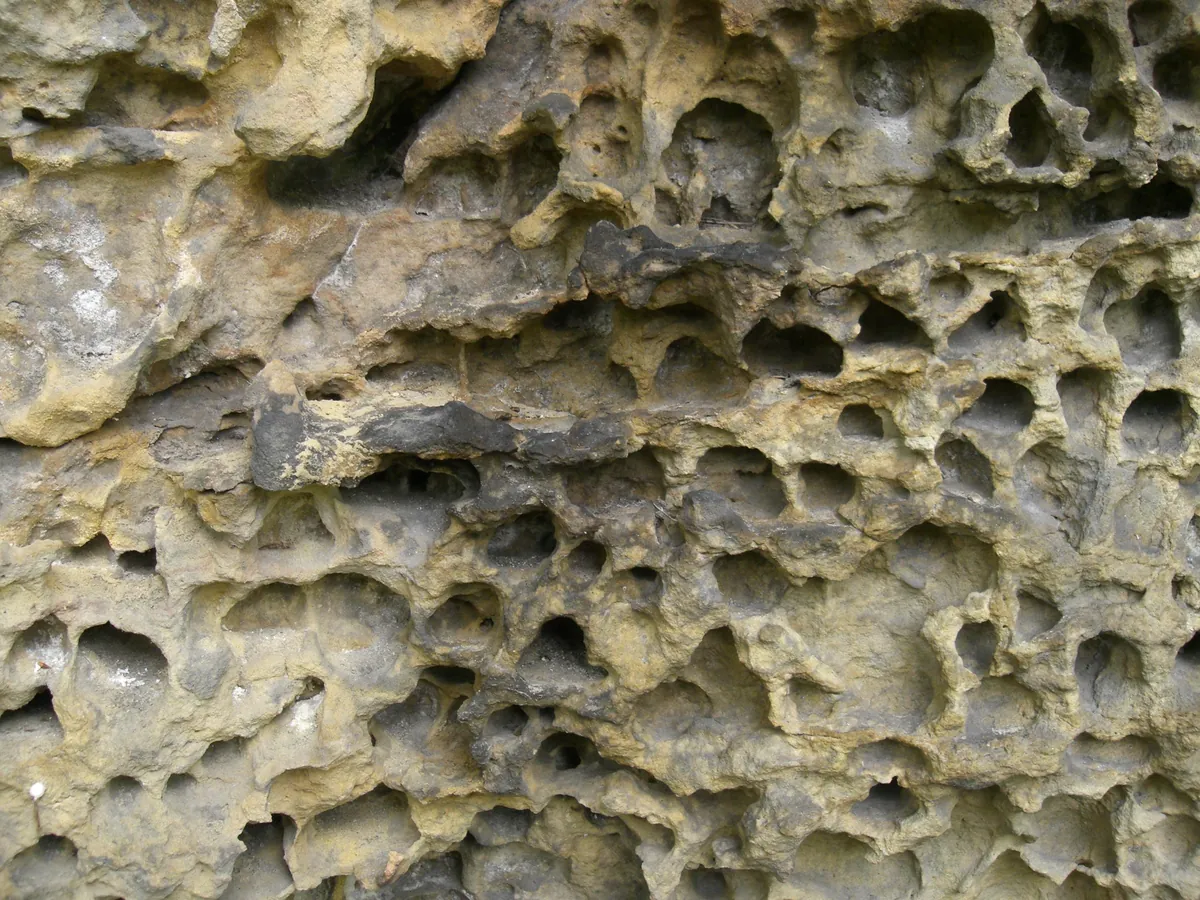
Cada torre y el propio arco son arena compactada de un mar del Cretácico que cubrió esta tierra hace unos cien millones de años. Cuando el mar se retiró y la losa de arenisca quedó expuesta, la tensión tectónica lateral la agrietó en una cuadrícula de fisuras; luego el agua, el viento y la escarcha ensancharon esas grietas durante millones de años, esculpiendo los desfiladeros y dejando en pie torres y arcos. Estás caminando por el esqueleto erosionado de un antiguo fondo marino.
Un nombre de pintores nostálgicos
Aquí no hay Suiza ni la hubo nunca: la etiqueta es marketing del siglo XVIII. Dos pintores románticos suizos, Adrian Zingg y Anton Graff, pensaron que el país de arenisca erosionada les recordaba a su hogar, y el nombre se quedó a ambos lados de la frontera: Suiza Bohemia en el lado checo, Suiza Sajona en el alemán. Es una pista de que la gente lleva muchísimo tiempo viniendo aquí por el paisaje.
Lo que verá
Lo que verás
Tres piezas clave definen la jornada. Esto es lo que realmente es cada una — y un par de cosas que conviene saber antes de plantarte frente a ellas.
Pravčická brána
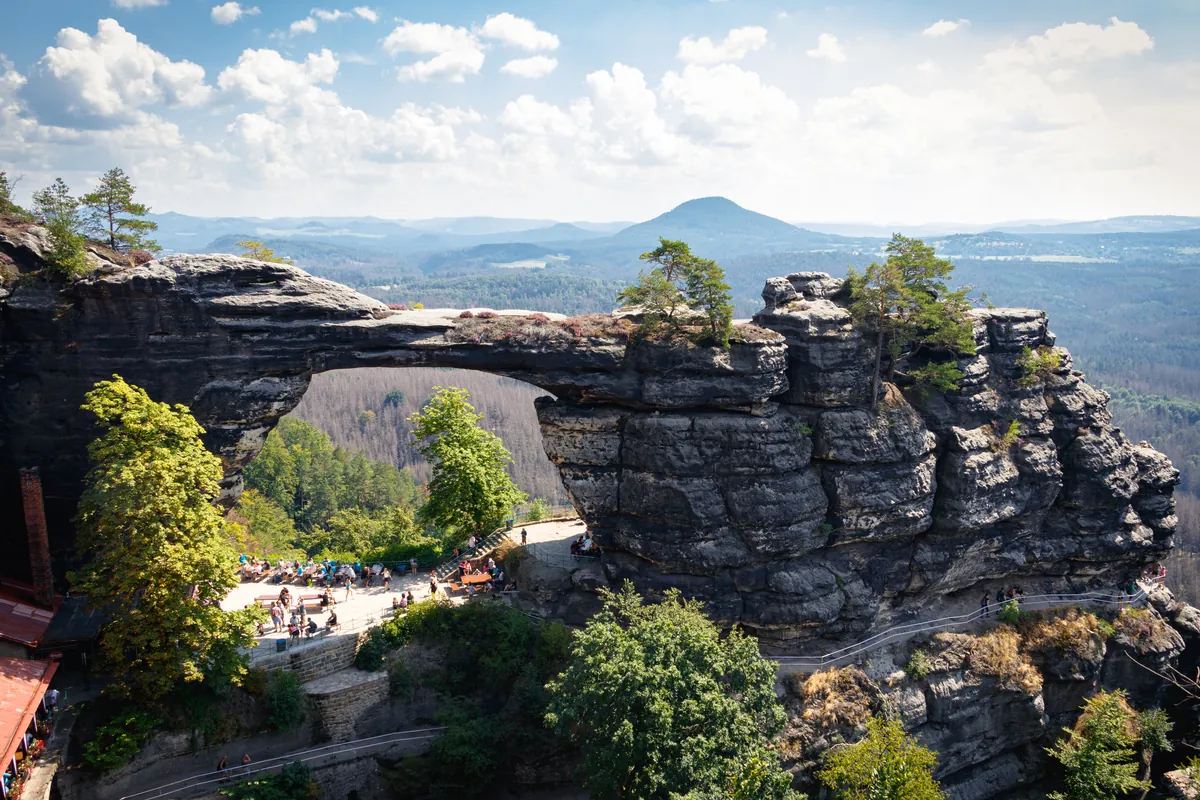
El arco de arenisca natural más grande de Europa: una luz de 26,5 metros cuya banda portante tiene solo unos tres metros de grosor en su punto más delgado. Esa delgadez es la razón por la que no se puede caminar sobre él — la cima está prohibida desde 1982, tras décadas de escaladores que la erosionaron. Se admira desde las terrazas inferiores, que de todos modos ofrecen la mejor vista.
Sokolí hnízdo
El chalé de cuento construido justo debajo del arco en 1881 por el príncipe Edmund de Clary-Aldringen, hoy un restaurante con terrazas panorámicas y un pequeño museo. Es la razón de que haya una verja y una entrada módica en el arco — los terrenos son de propiedad privada desde que se privatizó el antiguo hotel.
El paseo en barca por la Garganta de Edmund
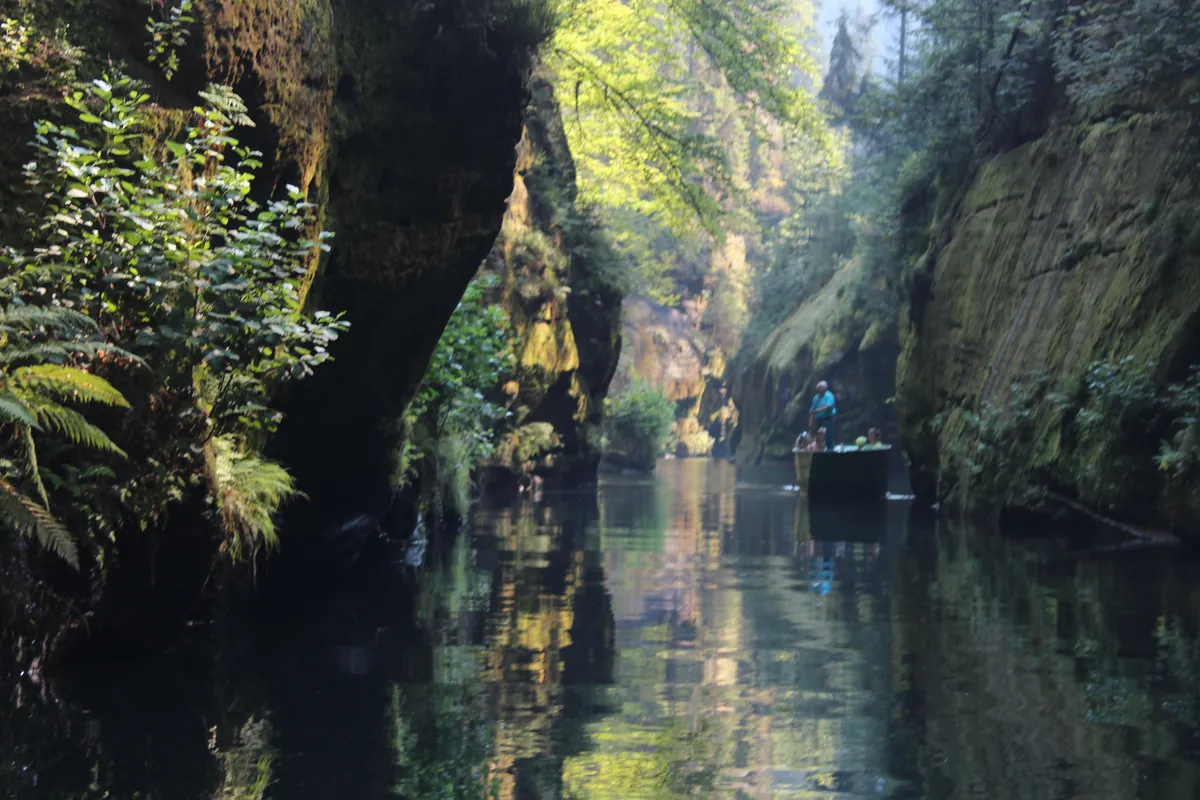
La experiencia insignia: un barquero ataviado con traje tradicional impulsa con pértiga una barcaza de fondo plano unos 960 metros — unos veinte minutos — por la Kamenice represada entre paredes de cien metros de altura, narrando las formas de las rocas y contando historias fantásticas. Las barcas recorren esta "Garganta Silenciosa" desde la década de 1890; la Garganta Salvaje, río arriba, añade un segundo tramo más corto.
El Bastei
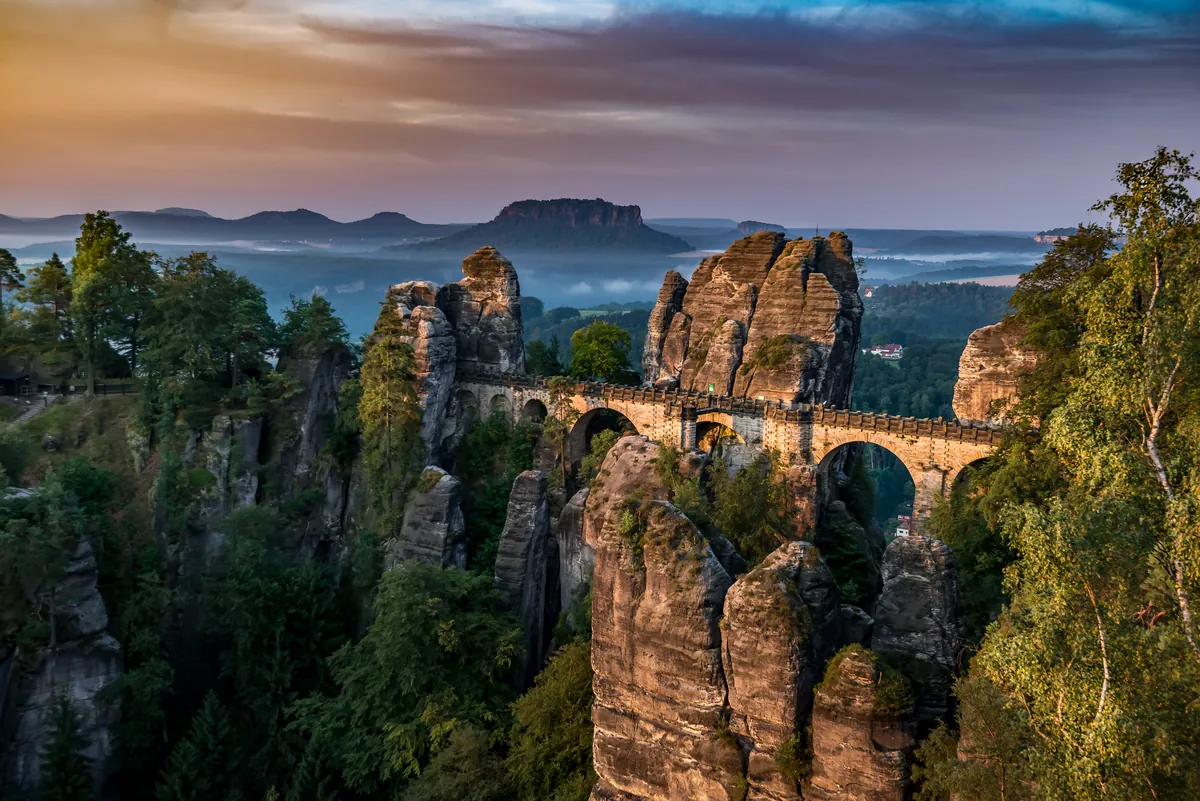
Al otro lado de la frontera, en la Suiza Sajona, el Bastei es un impresionante conjunto de pináculos rocosos unidos por un puente de piedra de 1851 que se alza a casi 200 metros sobre el río Elba. Cruzar la frontera es sencillo dentro de la zona Schengen, por eso "dos países en un día" es el formato habitual de las excursiones guiadas, algo difícil de lograr por libre.
El arco en el cine
Las escenas de paisaje de la película de 2005 Las Crónicas de Narnia: El León, la Bruja y el Armario se rodaron en la Pravčická brána — aunque, como no se puede subir al arco, las tomas de los personajes corriendo por su cima se hicieron en un plató de estudio. Las cercanas Rocas de Tisá fueron el bosque nevado del Sr. Tumnus.
El mirador contra incendios
Tras el incendio de 2022, el parque construyó una nueva plataforma de observación en el sendero Mlýnská cesta para que los visitantes puedan contemplar el bosque quemado y en proceso de regeneración, convirtiendo la cicatriz en parte de la historia en lugar de ocultarla. Es una parada conmovedora en una ruta que trata sobre todo del tiempo profundo y la piedra antigua.
When to go
Temporada y cuándo ir
Los barcos de los desfiladeros y los terrenos del arco son estacionales, así que la época del año condiciona lo que se puede hacer.
Los barcos funcionan aproximadamente de abril a principios de noviembre
Las barcas operan aproximadamente de abril a principios de noviembre y no circulan en invierno, ni con niveles altos de agua ni heladas, cuando el río congelado o las crecidas hacen peligrosa la navegación con pértiga. En invierno, a veces los desfiladeros aún se pueden recorrer a pie, pero no hay barco — así que si el paseo en barca es imprescindible, conviene ir en temporada de navegación.
El otoño es la mejor época
A finales de septiembre y en octubre llega el follaje otoñal: las hayas y los abedules se tiñen y los desfiladeros resplandecen, con la tranquilidad de la temporada media. En mayo y junio todo es verde y los días son largos. Julio y agosto son los más calurosos y concurridos, y tras el incendio también son cuando el cupo diario de barcas se nota más; por eso, la temporada media resulta ahora doblemente gratificante.
Vístete para dos microclimas
Los desfiladeros se mantienen frescos y húmedos incluso en verano, así que lleva una capa extra; la meseta puede ser calurosa y expuesta. Los senderos se vuelven resbaladizos tras la lluvia, y hay una subida exigente además de muchos escalones: el calzado resistente es el consejo recurrente e innegociable para esta caminata.
Está más tranquilo que antes
El número de visitantes cayó de hecho tras el incendio de 2022 y se ha ido recuperando desde entonces, así que los días entre semana y en temporada media son notablemente más calmados que el pico anterior a 2022. Si te echaba atrás la idea de las multitudes en el arco más famoso de Europa, esta es, curiosamente, una buena ventana para venir.
¿Tour o por su cuenta?
¿Tour o por libre?
| Hazlo tú mismo | Visita guiada | |
|---|---|---|
| Cómo llegar | Vuelo de Praga → Děčín en tren, luego autobús a Hřensko: unas 2–2,5 horas por trayecto. | Transporte de ida y vuelta desde el centro de Praga, con chófer privado para usted |
| El barco por el desfiladero | Pague en persona en Hřensko bajo un cupo diario: pueden rechazarlo si está lleno. | Asiento de barco asignado incluido |
| La Bastei alemana | Muy difícil de añadir el mismo día en transporte público | Normalmente incluido: dos países en un solo día |
| Coste | Aprox. 25–40 € todo incluido (tren, autobús, arco, barcos) | Aprox. 130–170 €, todo incluido con guía |
| Ideal para | Senderistas seguros con un día completo, fechas flexibles y paciencia con los horarios checos | Cualquiera que disponga de un día y quiera ver el monumento sin arriesgarse a perder el último autobús |
La Suiza bohemia, en imágenes
La Suiza bohemia, en imágenes
El arco, el desfiladero y su barca de pértiga, las torres de arenisca y el puente de Bastei al otro lado de la frontera alemana.
Excursiones de un día a la Suiza Bohemia
Encuentra una excursión de un día para tus fechas
Cada tour a continuación es reservable a través de GetYourGuide, con disponibilidad en tiempo real y el precio final mostrado en tu propia moneda antes de pagar — transporte, barca del desfiladero y entrada al arco incluidos.
Planificando su día
Organizando tu día
Reserva un día completo
Sea cual sea el medio que elijas, esto es un día completo. Son de 2 a 2,5 horas de trayecto desde Praga en cada sentido, así que dispondrás de unas seis horas en el parque: tiempo de sobra para el arco, el paseo en barco por el desfiladero y, si vas en tour, para la Bastei. Si solo tienes medio día libre, esta no es la excursión; resérvala para un día en el que puedas dedicarle toda la jornada.
El problema del trayecto de punto a punto
El recorrido es esencialmente de punto a punto —de Hřensko al arco y de ahí a los desfiladeros—, no un circuito circular, por lo que los visitantes independientes deben planificar los autobuses en ambos extremos y vigilar el último regreso, sobre las 18:00. La furgoneta de un tour guiado elimina por completo ese problema y, con él, la causa más habitual de que un día organizado por cuenta propia acabe torciéndose.
Lleva calzado adecuado
Esto es una caminata de verdad, no un paseo: unos 10–12 kilómetros con una subida exigente hasta el arco y muchísimos escalones para entrar y salir de los desfiladeros, a menudo con el suelo húmedo. Un calzado firme y con buen agarre importa más aquí que casi cualquier otro consejo de esta página. Lleva una chaqueta para el frescor de los desfiladeros, agua y algo de picar.
Combinar con la Suiza Sajona
Si quieres ver tanto el arco checo como la Bastei alemana —y la mayoría de los que van por primera vez lo quieren—, un tour guiado de un día por la "Suiza Bohemia y Sajona" es, con diferencia, la forma más fácil de disfrutar de ambos, ya que hacer los dos lados en un solo día en transporte público resulta realmente complicado. Si solo te interesa el lado checo y eres un excursionista con experiencia, el día por libre es totalmente factible.
Flexibilidad en la reserva
Reservar un tour con antelación te garantiza sobre todo tranquilidad: tu transporte, tu entrada al arco y —fundamental desde el incendio— una plaza asegurada en el barco bajo el cupo diario. La mayoría de las ofertas incluyen cancelación gratuita hasta 24 horas antes, así que puedes fijar una fecha y aun así cambiarla si el tiempo en Praga se tuerce, que puede pasar.
Planificando un día en la Suiza Bohemia
Planificando un día en la Suiza Bohemia
Tras el incendio: qué hay abierto ahora en la Suiza Bohemia
El incendio forestal de 2022, qué ardió realmente, cuándo reabrieron los barcos de los desfiladeros y el estado real y actual del arco, los senderos y el paisaje en recuperación.
Leer más → TOUR O POR LIBREDe Praga a la Suiza Bohemia: ¿tour o por libre?
La ruta en tren y autobús, el problema del último autobús, el barco del desfiladero con aforo limitado y el complemento de Bastei —el análisis honesto de cada forma de hacer el día—.
Leer más → EL ARCOPravčická brána: el arco de arenisca más grande de Europa
Las dimensiones, por qué no se puede caminar sobre él, el chalet de cuento que hay debajo, la conexión con Narnia y cómo se formó.
Leer más → LAS BARCAS DEL DESFILADEROLas Barcas del Desfiladero de Kamenice: Edmund y Salvaje
Las barcas de madera impulsadas con pértiga, los barqueros y su cháchara, las distancias y duraciones, el siglo de historia y las normas tras el incendio.
Leer más → DOS PAÍSESBohemia y Suiza Sajona: Dos países, un solo día
El macizo de arenisca transfronterizo, el puente alemán de Bastei, y por qué tantas excursiones de un día recorren ambos lados de la frontera a la vez.
Leer más → PLANIFICA LA CAMINATASenderismo en la Suiza Bohemia: qué llevar y cuándo ir
El recorrido y su dificultad, las mejores épocas del año, qué llevar para los cañones y la meseta, y para quién es ideal esta excursión de un día.
Leer más →Questions
Preguntas sobre la Suiza Bohemia
¿Destruyó el incendio de 2022 la Suiza bohemia?
No. El fuego arrasó bosque, no roca, así que el arco de Pravčická brána, los desfiladeros y las torres de arenisca siguen intactos y abiertos. Verás algunas laderas quemadas con un vigoroso rebrote joven —un paisaje de recuperación genuino que muchos encuentran fascinante—, pero los escenarios emblemáticos salieron ilesos, y unos 150 km de senderos señalizados volvieron a estar operativos para la temporada de 2024.
¿Vuelven a funcionar los barcos por los desfiladeros?
Sí. Los paseos en barco por el desfiladero de Edmund reabrieron el 19 de julio de 2025 tras casi tres años cerrados, ahora con un límite diario de visitantes, venta de entradas presencial en Hřensko y acceso guiado. Como es el detalle más variable del parque, confirma las fechas y normas de la temporada en curso antes de viajar —una excursión reservada con asiento asignado es la forma más segura de garantizar plaza en un día de mucha afluencia.
¿Se puede visitar sin coche?
Sí. Tomas un tren desde Praga hasta Děčín y luego un autobús local a Hřensko —unas 2 a 2,5 horas por trayecto. Funciona, pero es un día largo condicionado al último autobús de vuelta, alrededor de las 18:00, en una ruta punto a punto, así que la versión independiente exige planificación y tolerancia con los horarios checos.
¿Se puede caminar sobre el arco de Pravčická?
No: la cima del arco está vedada al público desde 1982, después de que décadas de visitantes escalándolo erosionaran la piedra. La banda de carga tiene solo unos tres metros de grosor, así que es realmente frágil. Se contempla desde las terrazas del chalet Nido del Halcón, que queda abajo y que, de todos modos, ofrece la perspectiva más impresionante.
¿Cuánto se camina y qué nivel de dificultad tiene?
Unos 10 a 12 kilómetros en aproximadamente seis horas, con una exigencia moderada: una subida real hasta el arco, más un buen tramo de escaleras para entrar y salir de los desfiladeros. Es factible para cualquier persona con una forma física razonable y calzado adecuado, pero es una caminata de verdad, no un paseo suave, y los escalones de los desfiladeros pueden estar húmedos y resbaladizos.
¿Conviene hacer una excursión organizada o ir por libre?
Ir por libre sale más barato —unos 25–40 € frente a los 130–170 € de un día guiado— y resulta más flexible si eres un excursionista con confianza y no te importa manejarte entre tren, autobús y los horarios checos. Una excursión organizada elimina la cadena de transportes, el riesgo de perder el último autobús y el cupo limitado del barco en los desfiladeros, y por lo general añade la Bastei alemana. Si solo tienes un día, no llevas coche y quieres ver ambos países, la excursión suele ganar; si dispones de tiempo y buscas soledad, el plan por libre es muy viable.